
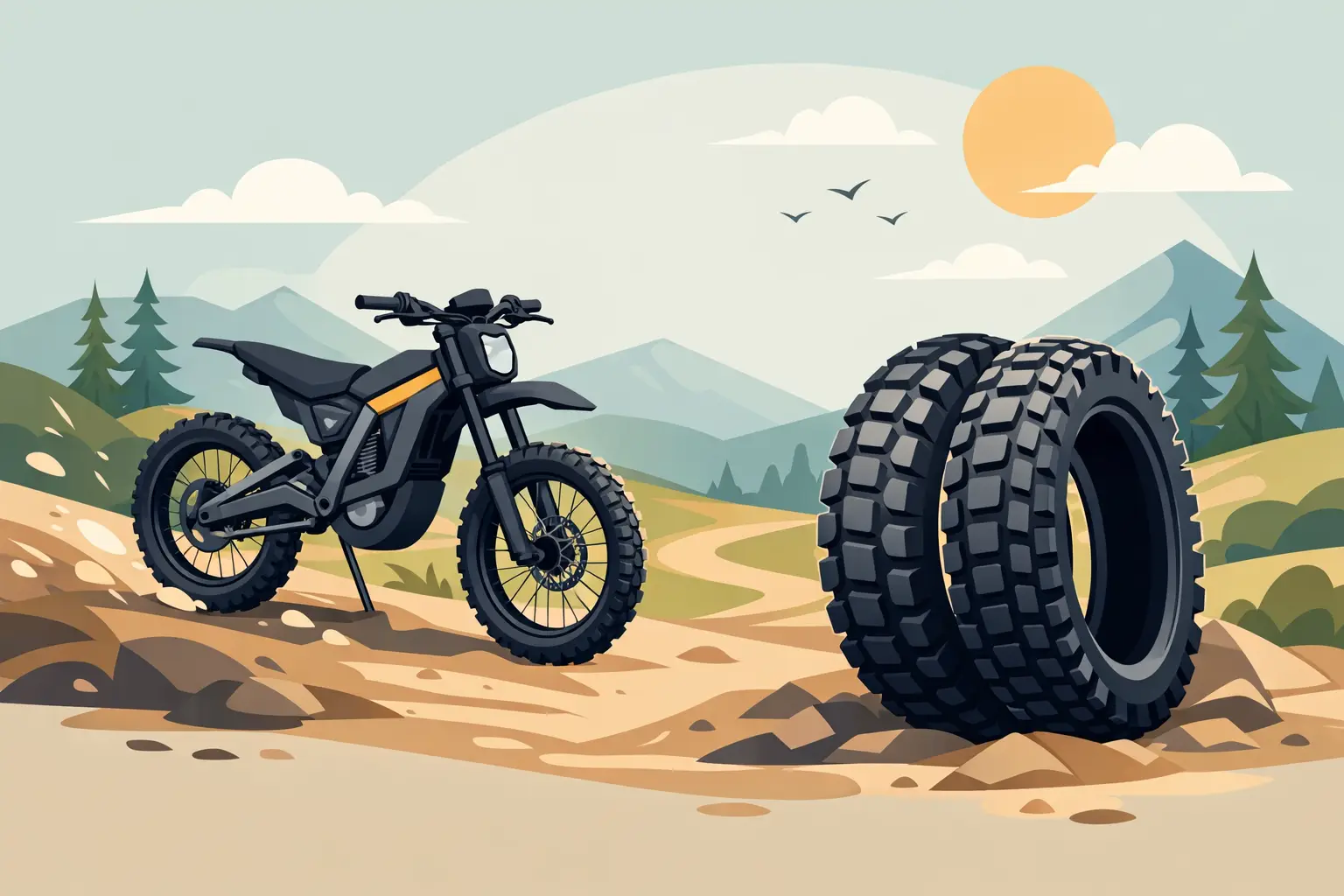
The fastest way to ruin a great Sur-Ron build is to keep the wrong tires on it. You can have strong torque, upgraded suspension, and a fresh battery, but if your bike is skating across loose dirt or bouncing off roots, you are leaving control on the table. Choosing the best sur ron tires for off road riding is not a small tweak – it is one of the biggest performance upgrades you can make.
A lot of riders start by asking for one perfect tire. That sounds simple, but off-road riding does not work that way. The best setup depends on where you ride, how hard you push, and whether your Sur-Ron spends most of its time on trails, loose climbs, rocky fire roads, or mixed terrain with some pavement in between. The goal is not just more bite. The goal is more confidence at speed, better braking, and less fight through the bars.
What makes the best Sur Ron tires for off road riding?
On a Sur-Ron, tire choice matters even more than many new riders expect. These bikes deliver instant torque, and that changes how the rear tire hooks up under throttle. A tire that feels fine at lower speeds on a lightweight pit bike can get overwhelmed fast when a Light Bee X or Ultra Bee starts putting power down out of a corner.
Tread pattern is the first thing most riders notice, and for good reason. Widely spaced, aggressive knobs work better in soft terrain because they can dig in and clear mud. Tighter knob spacing can feel more planted on hardpack and rocky sections, but it may give up traction when the trail gets loose. Rubber compound matters too. Softer compounds generally grip better, especially on roots and rocks, but they can wear faster if you ride hard or mix in pavement.
Sidewall feel is another piece of the puzzle. A stiffer tire can hold its shape better in turns and under braking, while a more compliant carcass can improve comfort and traction over uneven ground. Neither is always better. It depends on whether your priority is precise handling or maximum trail compliance.
Best tire styles for different off-road terrain
If you mostly ride loose dirt, sand, or freshly broken trails, a more open motocross-style tread usually delivers the best results. This kind of tire lets the knobs bite down instead of packing up. Acceleration feels stronger, especially climbing, and the front end tracks better when the trail starts moving under you.
For hardpack and dry trails, many riders get better results from an intermediate terrain tire. It still has enough edge to work in loose sections, but it does not feel vague when the ground firms up. This is often the sweet spot for riders who do a little bit of everything and do not want to swap tires every time conditions change.
Rocky terrain is where tire decisions get more nuanced. Sharp edges, square hits, and uneven surfaces reward a tire that can grip without getting sliced up too quickly. A slightly softer compound can make the bike feel dramatically more settled on technical climbs, but durability becomes the trade-off. If your local riding area is full of embedded rock, you need traction and toughness, not just a flashy tread pattern.
Mud is its own category. Deep mud needs big knob spacing and strong self-cleaning behavior. If the tire clogs, performance drops fast. The bike becomes harder to steer, braking distances grow, and every section feels like guesswork.
Front tire vs rear tire – do not treat them the same
A common mistake is choosing tires as if both ends of the bike do the same job. They do not. Your front tire is about steering accuracy, braking control, and confidence entering turns. Your rear tire is about drive, climbing grip, and putting power to the ground.
That means your front tire should inspire trust. If the front washes out, the ride gets sketchy in a hurry. Many experienced riders are more selective with front tire choice because a strong front end transforms the whole bike. The rear can spin a little and still be manageable. A vague front end makes every corner feel slower and riskier.
For many Sur-Ron owners, mixing tire models front and rear makes more sense than running a matching pair. You might want a sharper, more planted front with a rear tire that prioritizes traction and wear life. There is nothing wrong with that. In fact, it is often the smarter setup.
Best Sur Ron tires for off road setups by riding style
If you are a trail rider who hits mixed dirt, small climbs, roots, and hardpack, an intermediate off-road tire setup is usually the strongest all-around choice. It gives you solid grip without feeling too specialized, and it works well for riders who want one dependable setup for weekend rides.
If you ride aggressively and chase technical lines, you will probably want a more serious knobby with stronger side bite. This setup rewards commitment. It corners harder, drives better on climbs, and gives the bike a more locked-in feel. The trade-off is faster wear and a little less comfort on smoother surfaces.
If your Sur-Ron doubles as a light dual-use machine and still sees occasional pavement, a full soft-terrain tire may not be the move. It can wear quickly and feel squirmy on harder surfaces. In that case, a durable hybrid off-road tire often makes more sense. You give up a bit of maximum trail grip, but you gain consistency and longer life.
For younger riders or beginners, predictable handling matters more than the most aggressive tread on the market. A tire that breaks traction gradually and keeps the bike easy to control is usually better than one that only performs well when pushed hard. Fast is fun, but control is what keeps riders progressing.
Size, fitment, and why Sur-Ron owners need to pay attention
Sur-Ron tire fitment is not just about grabbing any off-road tire that looks good. Wheel size, tire width, swingarm clearance, and overall ride geometry all matter. A wider tire can add traction and a more planted look, but it can also change handling, slow steering response, or create clearance issues depending on your wheel setup.
Heavier, more aggressive tires also affect how the bike feels under power. More rotating mass can dull acceleration slightly, especially on smaller or more lightly modified setups. That does not mean bigger is bad. It means every change has a performance cost and a performance benefit.
If your build is focused on tight trails and quick direction changes, a lighter setup can feel more alive. If you are chasing grip and stability on rough terrain, a beefier tire may be worth it. It depends on how you ride and what you want the bike to do.
Tire pressure changes everything
Even the best tire can feel disappointing if the pressure is wrong. This is where a lot of off-road performance gets lost. Too much pressure reduces the contact patch and makes the bike feel harsh and twitchy. Too little can hurt stability, increase the chance of pinch flats, and make the tire feel sloppy in corners.
The sweet spot depends on terrain, rider weight, tire construction, and how aggressively you ride. Lower pressure can boost grip on rocks, roots, and loose dirt, but there is always a balance between traction and support. Riders who charge hard through rough terrain should be especially careful not to go so low that the tire folds or the rim takes abuse.
This is one of the easiest areas to test and improve. Before you blame the tire, make sure the pressure matches the ride.
When it is time to replace your off-road tires
A worn tire does not always look completely destroyed, but performance usually drops before the tire appears finished. Rounded knobs, reduced edge bite, and a front tire that starts pushing in corners are all signs that your setup is costing you traction.
Rear tire wear usually shows up first under throttle. The bike spins more easily on climbs and feels less eager out of turns. Front tire wear is often more subtle, but it matters just as much. If the bike suddenly feels less precise or more nervous entering corners, the front may be done.
If you ride hard, replacing tires before they are fully cooked can be one of the smartest moves you make. Fresh rubber brings back the kind of control that makes every ride faster and more fun.
The right tire makes your Sur-Ron feel like a new machine
The best sur ron tires for off road use are the ones that match your terrain, your pace, and your build goals. There is no magic answer for every rider, and that is actually good news. It means you can tune the bike to hit harder in the places that matter most to you, whether that is loose trail grip, rocky control, mud performance, or a balanced setup that does a bit of everything.
At SurronBikesZone, that rider-first mindset matters because the best upgrades are the ones you feel immediately. Get the tire choice right, and your Sur-Ron stops fighting the trail and starts attacking it. If you want more speed, more grip, and more confidence off-road, start where the power meets the ground.