
Brakes tell the truth about your ride. If your lever feels soft, your stopping distance is growing, or you hear that ugly scraping sound on the trail, it is probably time for a sur ron brake pad replacement. This is one of the fastest ways to bring back control, confidence, and that sharp, planted feel you want from a Sur-Ron when the speed picks up.
A lot of riders wait too long. They keep riding through squeal, fade, or weak bite because the bike still kind of stops. That is where performance drops off fast. Fresh pads do more than reduce noise. They restore braking power, protect your rotor from unnecessary wear, and help your bike stay ready for hard trail sessions, daily commuting, or aggressive mixed-use riding.
When a Sur Ron brake pad replacement is due
Brake pads wear differently depending on how and where you ride. A Light Bee X used for stop-and-go street miles will not wear pads the same way as an Ultra Bee getting pushed hard in dirt, mud, and elevation. Rider weight, speed, terrain, and braking habits all matter.
The most obvious sign is pad thickness. If the braking material is getting very thin, do not stretch it. Once the pad material gets close to the backing plate, stopping power drops and rotor damage becomes a real risk. If you hear metal-on-metal grinding, that is not a maybe – that is an immediate stop-and-fix situation.
Other signs are less dramatic but just as real. If braking feels weaker than usual, if you need more lever pull to get the same stopping force, or if your brakes pulse or chatter after heavy use, inspect the pads. Squealing can also point to contamination, glazing, or simple wear. It depends on the condition of the rotor and how recently the bike has been washed, ridden in mud, or exposed to chain lube overspray.
Pick the right pads for your riding style
Not every brake pad behaves the same, and that matters on a Sur-Ron platform built for quick acceleration and serious fun. Organic pads usually give quieter operation and a smoother initial bite. They are a solid fit for lighter-duty riding, casual street use, and riders who want predictable modulation.
Sintered or metallic pads are built for harder use. They handle heat better, last longer in rough conditions, and usually make more sense for aggressive off-road riders, heavier riders, or anyone riding fast in steep terrain. The trade-off is that they can be noisier and sometimes feel a little harsher on the rotor over time.
That is the real decision point. If your rides are mostly pavement, light trails, and shorter sessions, a quieter pad compound may feel better. If your Sur-Ron sees mud, repeated hard braking, downhill sections, or heavier loads, durability and heat resistance should win.
What you need before you start
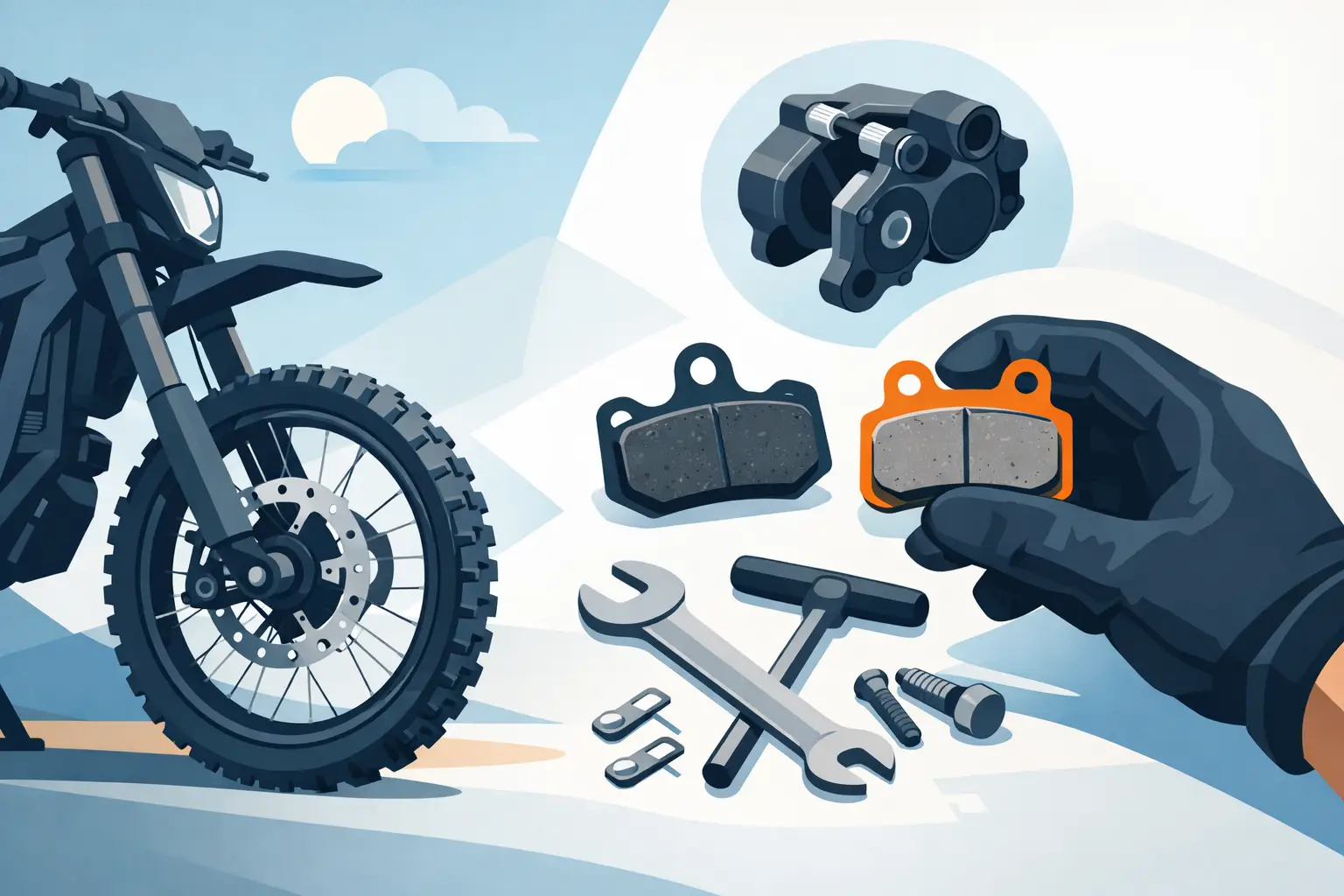
A sur ron brake pad replacement does not require a full workshop. Most riders can handle it with basic hand tools and a little patience. You will generally want the correct replacement pads for your model, a hex key or Allen wrench set, needle-nose pliers if your hardware setup calls for it, a clean rag, brake cleaner that is safe for bicycle or powersports braking components, and a plastic tire lever or pad spreader to reset the pistons.
It also helps to have gloves and good lighting. Brake systems do not reward sloppy work. Keep grease, oil, and dirty hands away from the pad surface and rotor. One small contamination issue can turn a fresh install into a noisy, weak-feeling mess.
How to do a Sur Ron brake pad replacement
Start by putting the bike on a stable stand if you have one. You want the wheel secure and easy to spin. Before removing anything, take a quick look at the caliper, rotor, and pad alignment. If the rotor is deeply scored, blue from heat, or visibly bent, new pads alone may not fully solve the problem.
Remove the retaining pin or clip that holds the pads in place. Hardware layout can vary a bit by model and brake setup, so take your time and keep the small parts organized. Once the pin is out, slide the old pads free. This is the moment to inspect what happened. If one pad is much more worn than the other, your caliper may need cleaning or the pistons may not be moving evenly.
With the old pads removed, clean the caliper area carefully. Do not blast dirt deeper into the system. Wipe away dust and debris, and use brake cleaner sparingly where needed. Then reset the pistons slowly with a plastic tool. This gives the caliper enough room for the thicker new pads. Go gently here. Forcing pistons back too aggressively can damage seals or create fluid overflow at the master cylinder.
Install the new pads in the correct orientation, reinstall the retaining hardware, and make sure everything is seated properly. Spin the wheel and check for obvious drag or misalignment. Then pump the brake lever several times before riding. This step matters. The lever will often feel soft at first because the pistons need to move back into contact with the new pads.
Don’t skip rotor inspection
New pads against a bad rotor are a weak combo. If the rotor is contaminated, heavily grooved, warped, or worn beyond spec, braking will still feel off. Sometimes riders replace pads and blame the new set when the real issue is the disc.
Look for discoloration, deep scoring, or side-to-side wobble. Minor surface marks are normal, especially on bikes that actually get ridden. Serious grooves or visible warping are not. If the rotor has taken a beating, replacing or resurfacing it may be the smarter move.
This is also where pad choice and riding style come back into play. A rider hammering steep descents with repeated hard braking generates much more heat than someone cruising city streets. If you run hard and late on the brakes, your rotor and pad maintenance cycle will be shorter. That is not a flaw in the bike – that is the cost of performance.
Bedding in new brake pads
A fresh sur ron brake pad replacement is not fully finished the second the pads go in. New pads need to bed into the rotor surface. Without that process, you may get inconsistent bite, noise, or reduced stopping power.
The basic idea is simple. Start with a safe, low-traffic area and do a series of controlled stops from moderate speed. Do not immediately grab a handful of brake and slam the system into full heat. Build heat gradually with repeated stops, giving the pads and rotor a chance to mate evenly.
This part tests patience, but it pays off. Proper bedding improves feel, helps reduce glazing, and gives you the cleaner, stronger braking response riders want. If you skip it, the brakes may still work, but they often will not work at their best.
Common mistakes that kill brake performance
The biggest mistake is contamination. Touching the pad surface with oily hands, spraying the wrong products near the rotor, or getting chain lube where it does not belong can ruin braking fast. If your new pads squeal and barely bite right after installation, contamination is one of the first things to suspect.
The second mistake is ignoring piston behavior. If one piston sticks, the pads can wear unevenly and the rotor can rub. A simple pad swap will not fix that forever. You may need caliper service if the pistons are not retracting or extending evenly.
The third mistake is replacing pads too late. Once the old pads wear down to metal, the rotor can take damage that costs more than a basic service job. That turns routine maintenance into a bigger repair than it needed to be.
Should you do it yourself or have a shop handle it?
If you are comfortable with basic maintenance, doing your own sur ron brake pad replacement makes a lot of sense. It is cost-effective, fast, and a smart way to stay connected to how your bike is wearing. For riders who already check chains, tires, suspension, and bolts, brake pads fit naturally into that routine.
If your brake system also has fluid issues, severe rotor problems, leaking seals, or a lever feel that stays spongy after installation, a shop may be the better call. There is no shame in that. Brakes are not the place to guess your way through a problem.
For riders who want dependable parts and a performance-first setup, SurronBikesZone makes it easier to stay ahead of wear instead of reacting after the ride quality drops off. That matters when you want your Sur-Ron ready to charge hard, stop hard, and stay in the fight.
A strong motor gets the attention, but braking is what lets you use that power with confidence. Keep your pads fresh, keep your rotor clean, and your next ride will feel a lot more alive when it is time to slow things down.