
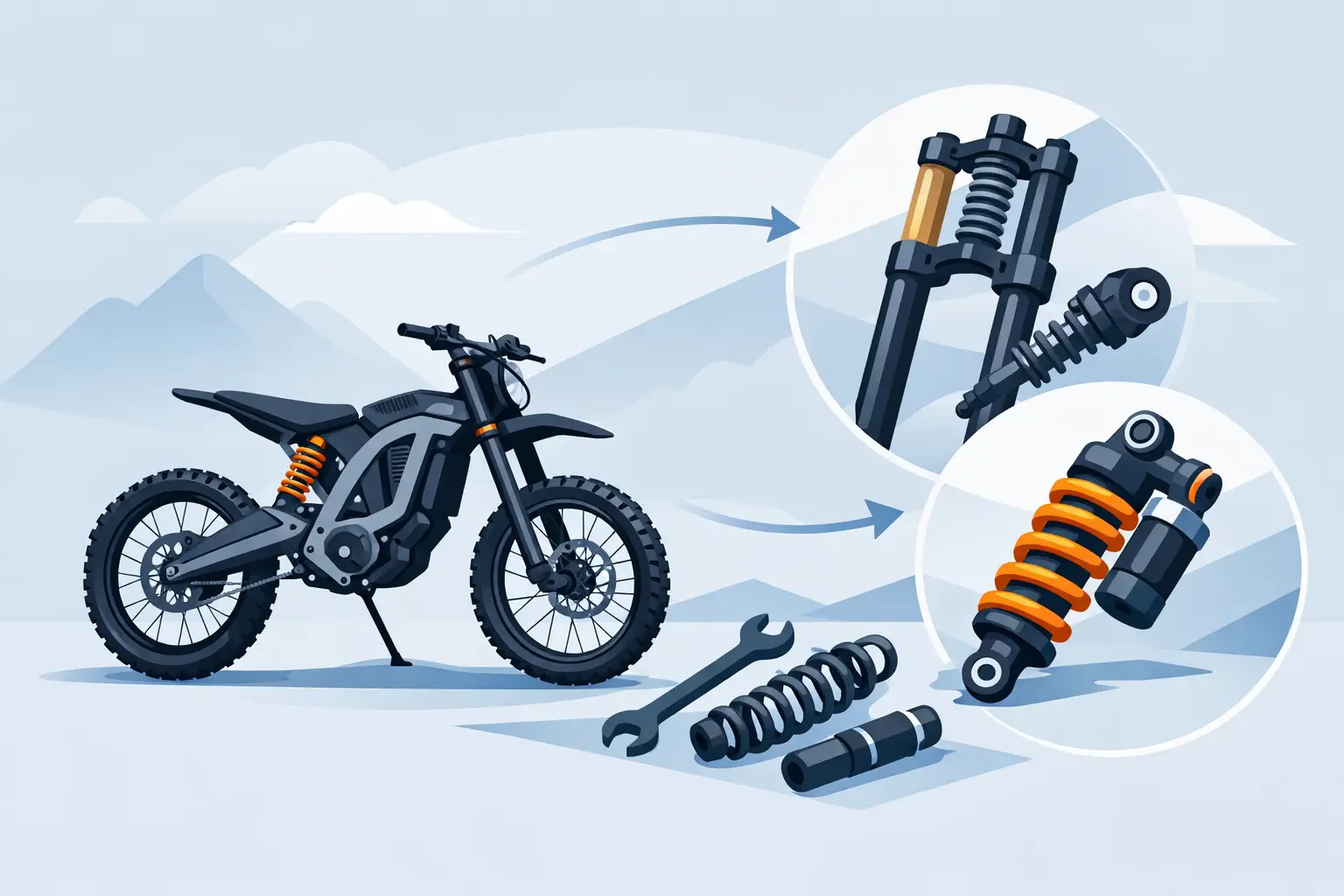
A rough landing tells you everything. If your Sur-Ron feels harsh over chop, blows through travel on jumps, or gets unsettled when the trail speeds up, it is probably time for a sur ron suspension upgrade. More power is fun, but better suspension is what lets you use that power with confidence.
Why a sur ron suspension upgrade matters
A lot of riders chase batteries, controllers, and motors first. That makes sense if you want bigger numbers. But suspension is what keeps the bike planted, predictable, and fast in the real world. On a Sur-Ron, especially a Light Bee X or L1E, the stock setup can feel decent for casual riding and lighter riders. Push harder, ride rougher terrain, or add weight with gear and accessories, and the limits show up fast.
The biggest gains are not always about going stiffer. Good suspension improves traction, braking stability, corner support, and rider comfort at the same time. That means less deflection in rock gardens, less front-end dive under braking, and fewer sketchy moments when the rear kicks on repeated hits. It also means you can ride longer without feeling beaten up.
That is the real value of a suspension upgrade. It does not just make the bike feel more expensive. It makes the bike easier to control when the pace picks up.
Start with setup before buying parts
Before you spend money, check the basics. A surprising number of Sur-Ron owners are riding with suspension that is not set for their weight or terrain. If preload, rebound, and compression are off, even premium components will feel disappointing.
Sag is the first thing to measure. If the bike sits too high, it can feel twitchy and harsh. Too low, and it will wallow, dive, and bottom out too easily. Rebound matters just as much. Too fast, and the bike feels bouncy and nervous. Too slow, and it packs down over repeated bumps, which kills traction and comfort.
Tire pressure also changes how suspension feels. Overinflated tires can mimic bad fork settings by making the front end feel chattery and unforgiving. Underinflated tires can make the bike vague and unstable. Dialing in these basics is not glamorous, but it is the fastest way to know whether you need adjustment or a true hardware upgrade.
Fork upgrades: where most riders feel the difference first
The front fork usually gets attention first because that is where many riders notice harshness, brake dive, and lack of support. On stock Sur-Ron setups, the fork can feel underdamped for aggressive riding and undersprung for heavier riders. That shows up when you hit square edges at speed or load the front hard into turns.
A better fork gives you more controlled movement instead of just more resistance. That distinction matters. If a fork is simply stiff, it can beat you up and reduce front-end grip. If it is properly damped, it can absorb impacts while staying composed.
For lighter trail use, a spring rate change and internal tuning may be enough. For harder enduro, jumping, or faster mixed terrain, a full fork upgrade can transform the bike. Riders usually notice cleaner steering feedback, better braking balance, and more confidence entering rough corners.
There is a trade-off, though. A more capable fork often costs real money, and the difference is easiest to justify if you actually push the bike. If your riding is mostly smooth paths, neighborhood use, or occasional dirt, a full premium fork may be overkill.
When the stock fork is still enough
If you are a lighter rider, staying on mild terrain, and not bottoming out regularly, stock may be fine with proper setup. The smart move is to be honest about your riding. Not every Sur-Ron needs race-level hardware.
When the stock fork is holding you back
If you feel repeated front-end chatter, hard bottom-outs, diving under braking, or vague handling when the trail gets rough, the fork is likely the weak link. At that point, tuning may help, but an upgrade is often the cleaner long-term fix.
Rear shock upgrades: the part riders underestimate
The rear shock does more than soak up bumps. It controls how the bike squats under acceleration, how it tracks through loose terrain, and how stable it feels when the rear wheel is getting hammered. A weak rear setup can make the entire bike feel disconnected, even if the fork is decent.
On Sur-Ron bikes, rear shock upgrades are especially valuable for riders who add power upgrades, ride technical terrain, or carry more body weight. More torque means more demand on the chassis. If the rear shock cannot keep the tire planted, all that extra power just turns into wheelspin and instability.
A stronger, better-tuned rear shock can improve small-bump sensitivity while still giving enough support for bigger hits. That sounds contradictory, but that balance is exactly what good suspension does. It feels smoother on trail chatter and more controlled on hard compressions.
For many riders, the best result comes from upgrading front and rear together. If you only improve one end, the bike can become unbalanced. A sharp new fork paired with a soft, overwhelmed rear shock will still feel off. The same goes in reverse.
Match the upgrade to how you actually ride
This is where smart buying beats impulse buying. The right sur ron suspension upgrade depends on where you ride, how fast you ride, and how much you weigh with gear.
If your Sur-Ron spends most of its time on urban streets, hardpack, and light trails, comfort and control matter more than full race stiffness. In that case, a moderate fork and shock upgrade or a spring-and-tune package may be the sweet spot.
If you ride technical singletrack, roots, rocks, and steep descents, damping quality becomes a bigger deal. You need suspension that stays active without blowing through travel. Riders in this category usually benefit from higher-end fork internals or complete component upgrades.
If your focus is jumps, aggressive off-road speed, or a heavily modified bike with more power, suspension becomes non-negotiable. At that level, stock parts usually become the bottleneck. The faster the bike gets, the more the chassis needs support.
Rider weight changes everything too. A setup that feels plush for a 140-pound rider can feel terrible for someone at 210 pounds with gear. That is why spring rate and valving matter more than hype.
Don’t ignore geometry and balance
Suspension upgrades are not just about absorbing impacts. They also affect how the bike sits and steers. Raising or lowering one end changes geometry, weight distribution, and the overall attitude of the chassis.
A taller front can slow steering and improve stability, but too much can make the bike feel lazy. A rear that sits too low can make corner exits feel vague and increase front-end push. A rear that is too high can make the bike nervous. This is why random parts swaps do not always deliver the result riders expect.
The best setups feel balanced front to rear. You want a bike that turns with confidence, stays settled under braking, and does not get kicked offline when the terrain gets ugly.
Is it worth upgrading on a used Sur-Ron?
Usually, yes – if the bike is mechanically solid. A used Sur-Ron can be a great platform because suspension improvements often deliver more real-world performance than flashy cosmetic mods. If the frame, linkage, wheels, and bearings are in good shape, upgrading the suspension can make an older bike feel dramatically more capable.
This is especially true for budget-conscious riders. Buying used and putting money into the areas that matter can be a smarter path than stretching for a newer bike while keeping stock suspension. At SurronBikesZone, that rider-first mindset is part of the appeal. Performance should feel within reach, not locked behind the highest price tag.
What to prioritize if your budget is limited
If you cannot do everything at once, start with the end of the bike that is causing the biggest problem. Frequent front-end harshness and brake dive point to the fork. Rear instability, poor traction, and harsh kickback point to the shock.
If both ends feel equally weak, focus on spring rates and setup first, then plan a staged upgrade. That approach gives you better performance now without wasting money on parts that do not match your needs.
It is also worth remembering that suspension is one of the few upgrades that improves every ride. You feel it when you commute, when you cut through trails, and when you push hard off-road. It is not a niche mod. It changes the whole machine.
The real win: more speed with more control
The best Sur-Ron builds are not just powerful. They are composed. A bike that accelerates hard but skips, dives, and bucks through rough terrain is leaving performance on the table. A well-chosen suspension setup gives you a calmer chassis, better grip, and the confidence to ride faster without feeling like you are fighting the bike.
That is why suspension deserves a place near the top of your upgrade list. Not because it sounds technical, but because it makes the ride stronger everywhere that counts. If your Sur-Ron is ready for the next level, better suspension is often the upgrade that finally makes the whole bike click.
When the trail gets rough and the speed climbs, control is what keeps the fun alive. Build for that, and every ride feels sharper.